
Posted by eporter on September 16, 2026
How Mindfulness Can Support Youth and Their Mentors
Young people are navigating a lot. Academic pressures, social media influences, family stress, difficult emotions, and everyday challenges can all leave children and teens feeling overwhelmed. Mentors are often there for young people during these moments, listening, offering encouragement, and helping them think through what comes next.
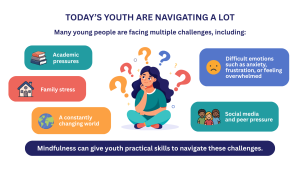
One approach that can help young people develop skills for handling these challenges is mindfulness. Mindfulness means intentionally paying attention to the present moment with openness and curiosity, without immediately judging our thoughts or experiences. Rather than eliminating difficult emotions or stressful situations, mindfulness can help us notice what we are experiencing so we can respond thoughtfully instead of reacting automatically.
What Does Mindfulness Look Like in Everyday Life?
Mindfulness does not have to mean sitting quietly and meditating. It can be as simple as taking a moment to pause, notice, and respond.
A young person who is frustrated after an argument with a friend, nervous about a test, or struggling with a new skill might benefit from slowing down and recognizing what they are thinking and feeling before deciding what to do next. These small moments can provide opportunities to practice responding more intentionally.
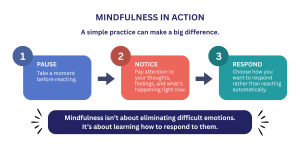
Mentors can reinforce these skills through everyday interactions. When a mentee is upset or overwhelmed, a mentor does not necessarily need to solve the problem. Instead, they can create space for the young person to slow down, talk through what they are experiencing, and consider how they want to respond.
Building Skills That Extend Beyond the Mentoring Relationship
Research suggests that mindfulness-based programs can help children and teens strengthen skills such as attention, self-regulation, emotional awareness, and coping. These programs have also been associated with social skills and more positive, calm environments.
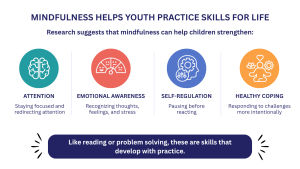
Like many of the skills mentors help young people develop, self-regulation takes practice. Children are not born knowing how to recognize stress, calm strong emotions, or redirect their attention when distracted. Opportunities to practice these skills can help youth build strategies they can carry into future challenges.
For mentors, understanding mindfulness can provide another lens for helping mentees navigate difficult moments, reflect on their experiences, and build skills for managing challenges more independently.
Equip Your Mentors with Skills to Better Support Young People
Mentors can play an important role in helping young people reflect on challenges, manage difficult moments, and develop skills they can carry into the future. Stay tuned for more information and resources for helping mentors support mentees using mindfulness.